
The most expensive mistake in software development doesn't happen in engineering. It happens before a single requirement is written down, when a team starts building against an assumption nobody actually tested. A discovery workshop exists to catch that mistake early, while it still costs a conversation instead of a rebuild.
At JRC Software, we don't start engagements with a kickoff call and a backlog. We start with structured product discovery.
What a Discovery Workshop Is
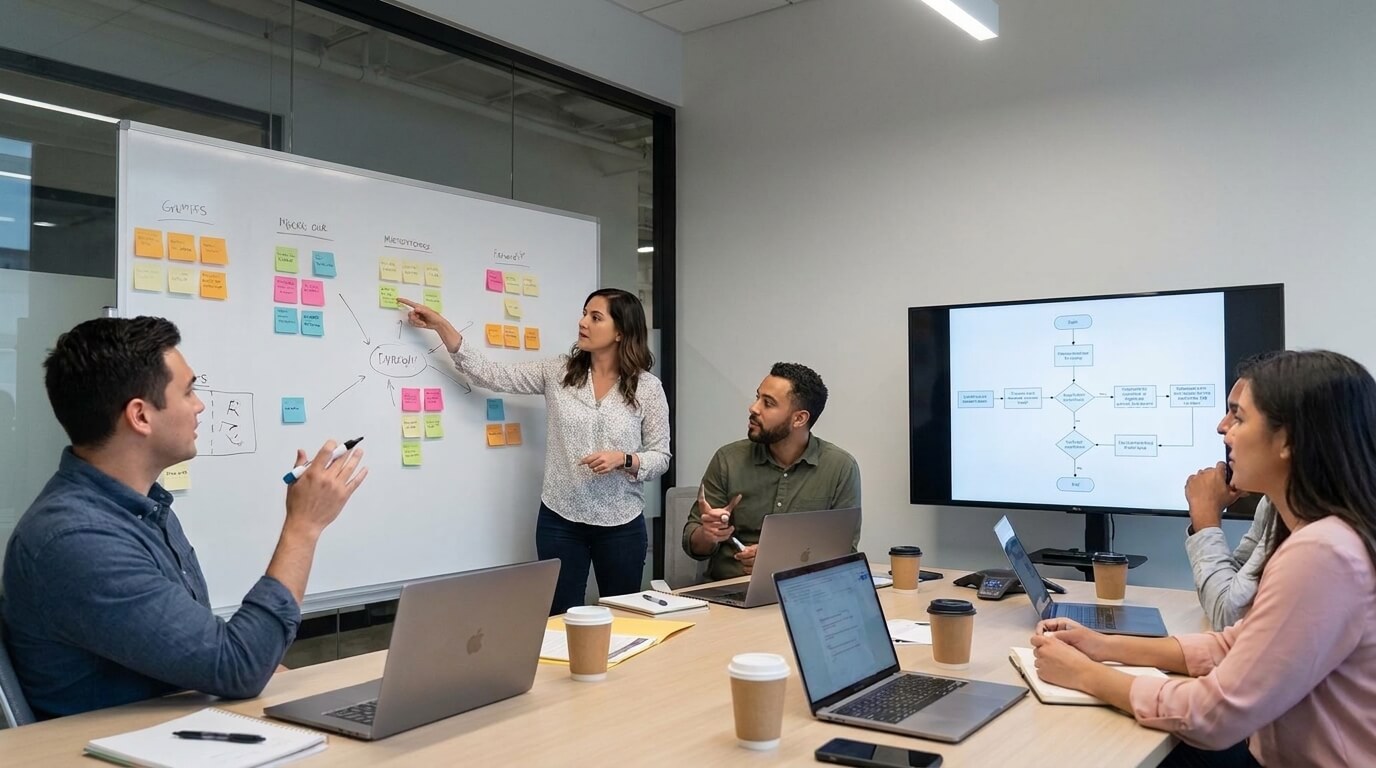
A discovery workshop is a focused, structured session, typically run over a few days (shorter for smaller projects), that brings together stakeholders, users, and our technical team to align on the real problem before any solution gets designed. It's not a sales pitch disguised as a workshop, and it's not a rubber-stamp exercise before development starts. Done properly, it produces:
- A clearly defined problem statement, agreed by every stakeholder in the room
- A shared understanding of who the actual users are, and how their needs differ from the people commissioning the project
- Early identification of technical, business, and regulatory constraints that will shape the solution
- A prioritized view of what needs to exist in a first release versus what can wait
- A foundation the team can turn directly into a specification, rather than starting from a blank page
Why Skipping This Step Is So Costly
Teams that skip discovery and go straight to building usually don't fail immediately. They fail three or four months in, when it becomes clear the wrong problem was solved, the wrong users were designed for, or a technical constraint nobody flagged early is now blocking a feature that's already half-built.
At that point, fixing the mistake means reworking specifications, rewriting code, and re-testing everything downstream. A two-day discovery workshop that costs a handful of stakeholder hours upfront can save up to six months of rework later, because the cost of a wrong assumption grows with every sprint built on top of it.
What the Two Days Look Like
Day one: understand the problem. The morning is for stakeholder alignment, where everyone states what they believe the product needs to do. The afternoon is for users and constraints: hearing from the people who will use the product day to day, and mapping the technical, data, integration, and compliance limits the solution has to live within.
Day two: shape the solution. The morning turns what we learned into an agreed problem statement and a prioritized list of needs. The afternoon defines the scope of a first release and what can wait, then sets up the handoff into specification.
Who should attend from your side: a decision maker who can settle priorities, the product owner, someone close to the day-to-day users, and a technical contact who knows your existing systems.
What you walk away with: a Discovery Report, covering the problem statement, prioritized requirements, mapped constraints, and the proposed first-release scope.
What a Discovery Workshop Looks Like in Practice
Stakeholder alignment sessions. Different stakeholders often carry different, sometimes contradictory, assumptions about what the product needs to do. Getting everyone in the same room, saying the quiet disagreements out loud, is often the single most valuable part of the entire process.
User research and real-world context gathering. Whoever commissions a project is rarely the only person who will use it. Discovery workshops bring in the actual end users, or at minimum, detailed insight into their workflows, so the resulting design reflects reality rather than assumptions made in a boardroom.
Constraint mapping. Technical limitations, data availability, integration requirements, security and compliance obligations. All of it surfaces far more cheaply in a workshop than three sprints into development.
Problem definition before solution design. It's tempting to walk into a workshop already designing the dashboard or the app. Good discovery resists that pull long enough to make sure the problem being solved is the right one first.
Everything from these sessions feeds directly into our spec-driven development process, so nothing gets lost between the workshop and the engineering plan.
How This Fits Into an Integrated Delivery Model
Because JRC operates as one connected team across AI, data engineering, UX and product design, cloud, and engineering, our discovery workshops bring the right technical expertise into the room from day one. A workshop that only involves product and design people will miss data or infrastructure constraints that shape what's feasible. A workshop that only involves engineers will miss the user experience issues that determine whether anyone wants the product. Product discovery works best when every discipline is in the room from the start, rather than handed from one department to the next.
Common Questions About Discovery Workshops
How long does a discovery workshop take? Our standard workshop runs over two days. Smaller projects can often be covered in a single focused day, and larger programmes may need a short follow-up session.
Is a discovery workshop necessary for a small project? Even small projects benefit from a lightweight version of discovery. The cost of misalignment scales with project size, but simple projects can still go badly wrong if the core problem was never clearly defined.
How much of our team's time does it take? Around two days from the people listed above, plus a short preparation call beforehand. Not everyone needs to attend every session.
What if we already have requirements written? That makes a great starting point. Discovery then tests those requirements against real users and constraints, so you build on a validated brief rather than an assumed one.
Discovery Is Where Good Products Start
Every disciplined process we run afterward (spec-driven development, design thinking, QA automation, engineering excellence) only works as well as the problem definition it's built on.
Discovery workshops are where that foundation gets set, before anyone commits engineering time to an assumption nobody validated.
Ready to define the right problem before writing a single line of code?
Let's talk about running a discovery workshop before the build starts.